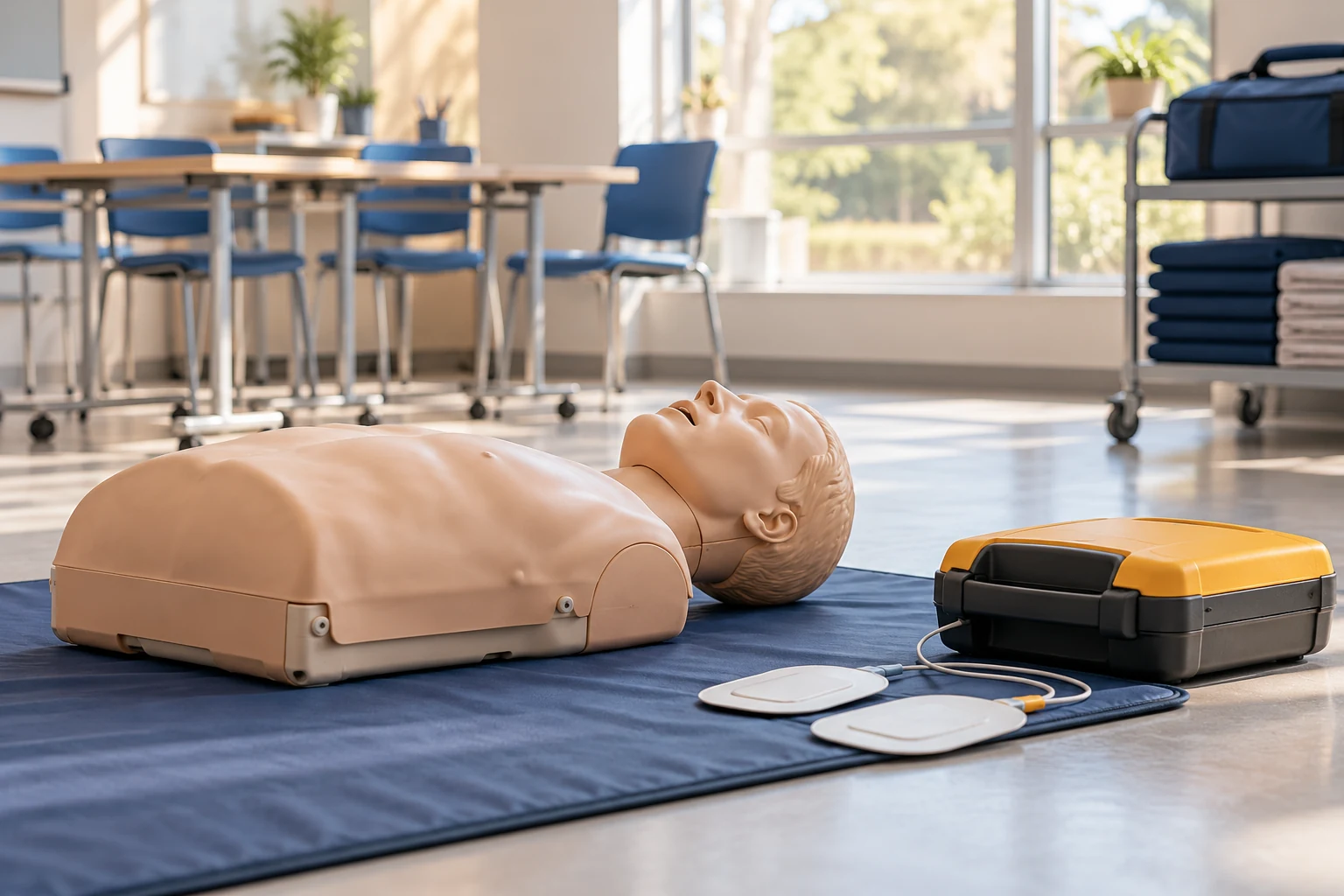
HRS position statement: Changing the tide in CPR and AED education for students in the United States.
Published by Heart Rhythm Society
Summary
AI-generatedOut-of-hospital cardiac arrest remains a leading cause of mortality in the United States, but bystander-initiated CPR remains suboptimal due to disparities and inconsistent training. The Institute of Medicine identifies US high school students as a prime target for CPR and AED education.
Key Takeaways
- 1Timely bystander CPR and AED use are the most critical determinants of survival in out-of-hospital cardiac arrest.
- 2Current 1-time or didactic-only instruction in high schools does not reliably produce durable skills or confidence to act.
- 3Evidence-based CPR and AED education must include hands-on initial training and frequent longitudinal refresher courses.
- 4Technology-enabled and student-led approaches should be integrated to improve training engagement and emergency response.
- 5Major demographic, socioeconomic, and geographic disparities in bystander CPR and AED use must be addressed through equitable resource allocation, targeted public training, and dedicated funding.
- 6National-level registries and robust data collection are needed to evaluate training effectiveness and track out-of-hospital cardiac arrest outcomes.
Scope & Objectives
Clinical Topic
Out-of-hospital cardiac arrest (OHCA)
Objectives
To evaluate the current landscape of CPR and AED education for US high school students and propose evidence-based solutions and an implementation framework for uniform, effective, and equitable initial and longitudinal training.
Target Patient Population
Out-of-hospital cardiac arrest (OHCA) victims
Target Providers
Patient Criteria & Setting
Therapeutic Area
CardiovascularGuideline Scope
Care Settings
Special Populations
Authors & Contributors
Guideline Features
Learning Context
Difficulty
intermediate
Learning Paths